
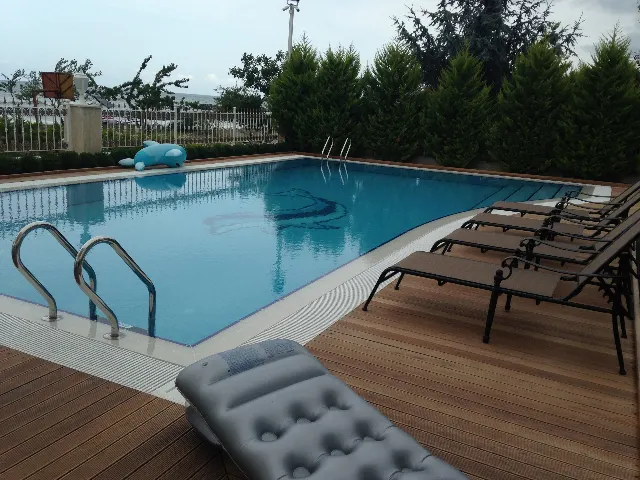
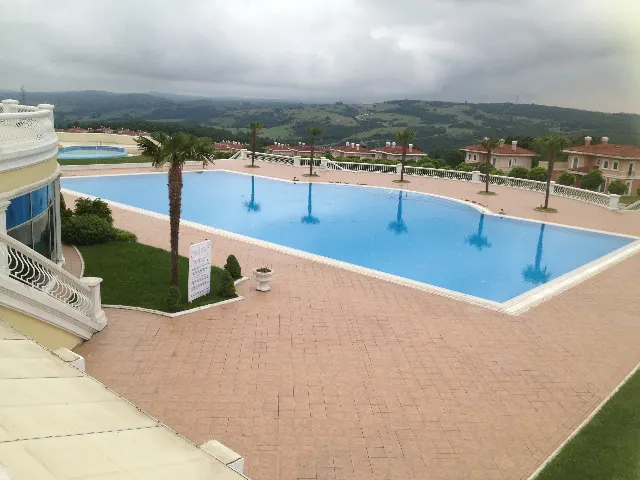
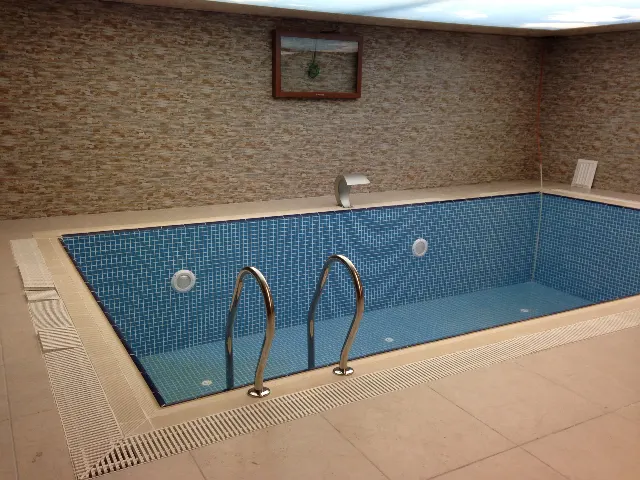
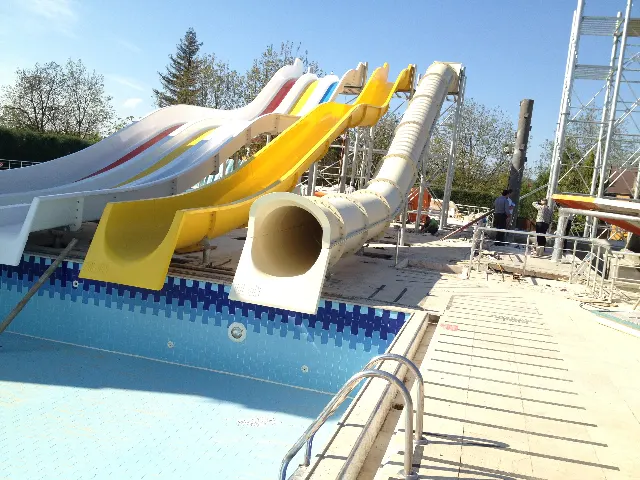
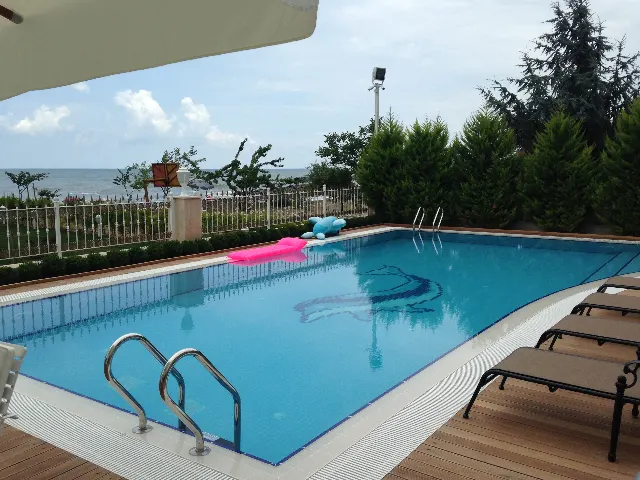
Swimming Pools
A good pool is born on paper long before the first spade goes in. We plan the concrete section, the structural calculation and the finish together, and during construction we make sure each layer is accurate enough to carry the next.
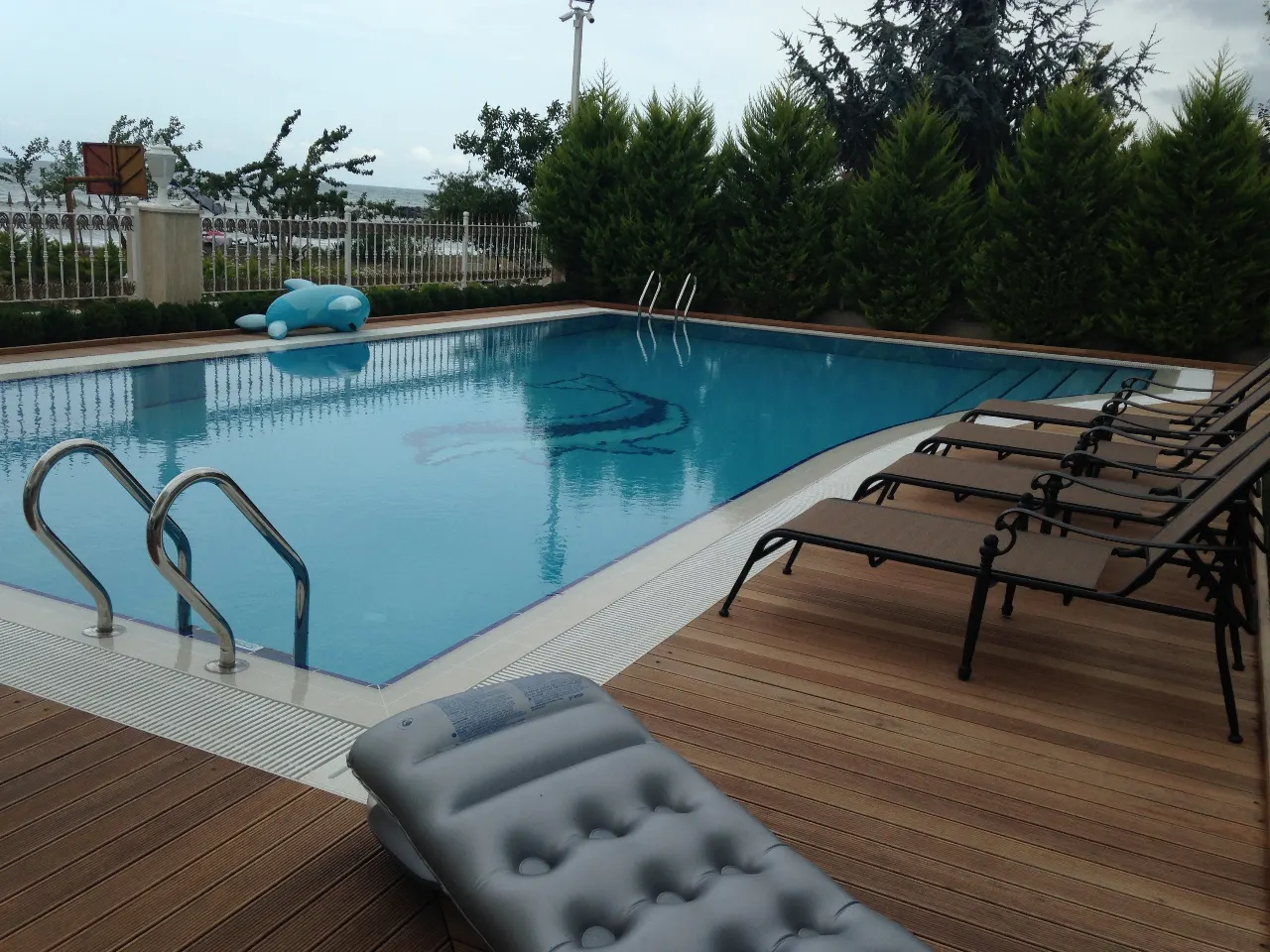
From design to water, step by step
-
01
Design and planning
The concrete section, structural requirements and choice of finish are handled together in one design.
-
02
Concrete construction
Drainage lines, hydraulic connections and plumbing are set in place before the pour.
-
03
Waterproofing
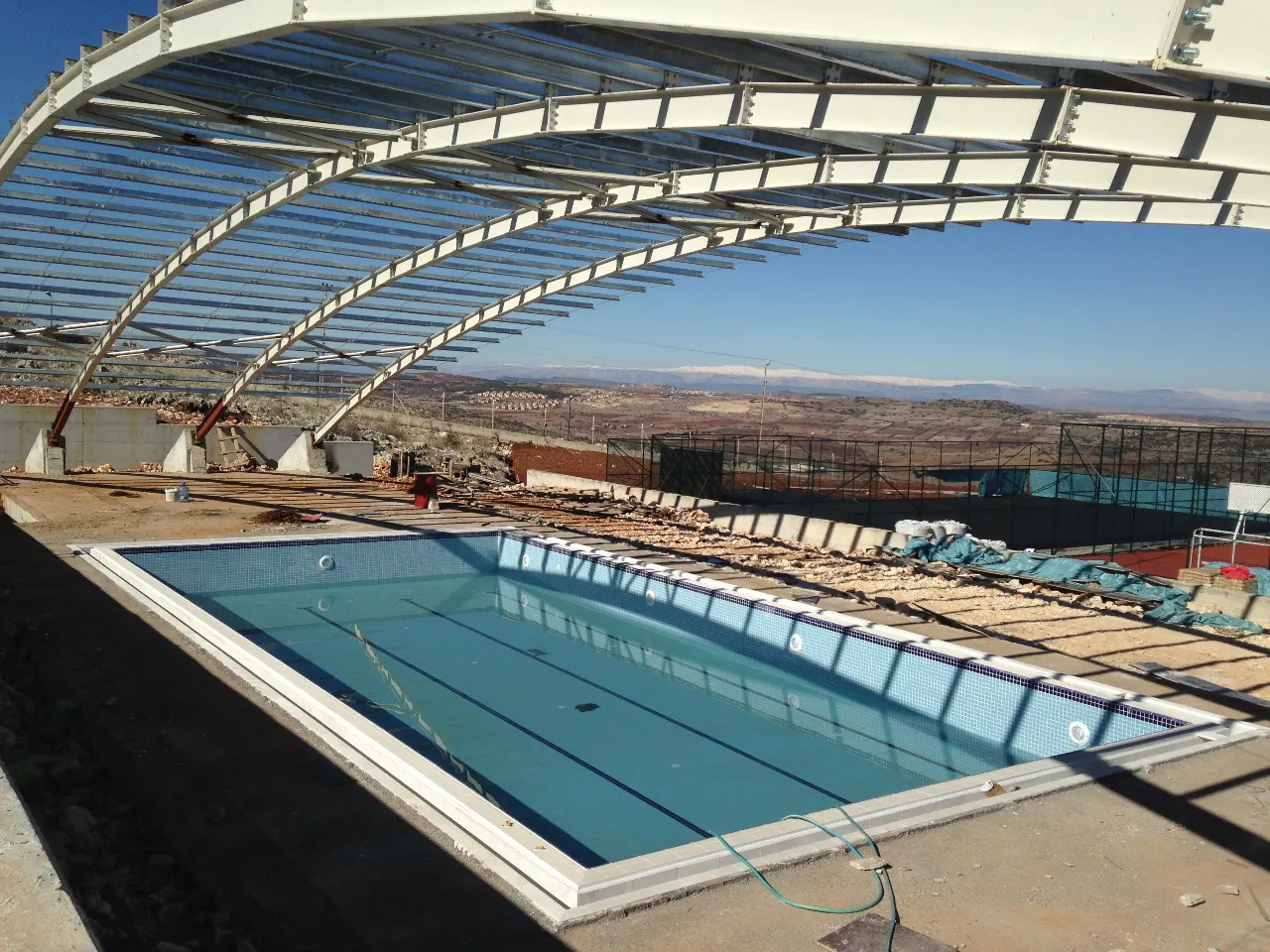
The pool shell is waterproofed before tiling and tested by standing full of water.
-
04
Tiling
Porcelain and mosaic finishes, laid level together with handholds and non-slip edges.
-
05
Hygienic junctions
Floor and walls meet with special concave and convex pieces that make cleaning easy.
-
06
Plant room
Filtration, pumps and valve work are designed and installed together with the pool.
-
07
Competition pools
Olympic-size pools are designed to pass the swimming federation's inspection and approval.
On site, what we watch for
- Overflow channel slope
- 5% from the pool edge towards the channel, 2% in the opposite direction on the far side of the channel.
- Expansion joints
- Joints with surrounding structures are closed with elastic silicone and never tiled over.
- Cold joints
- Avoided where possible; where unavoidable, a waterstop is used.
- Render and screed
- Thickness stays within 8–15 mm.
- Leak test
- After waterproofing the pool is filled and watched for at least a week, ideally 15 days.
- Tile adhesive
- Frost- and water-resistant flexible or epoxy-based adhesive is used.
- Grout
- Joints are left at 5 mm and filled with epoxy or flexible grout; ordinary grout is not used.
- When to fill
- The pool is filled only once construction, plumbing and landscaping are finished.
Projects in this field
All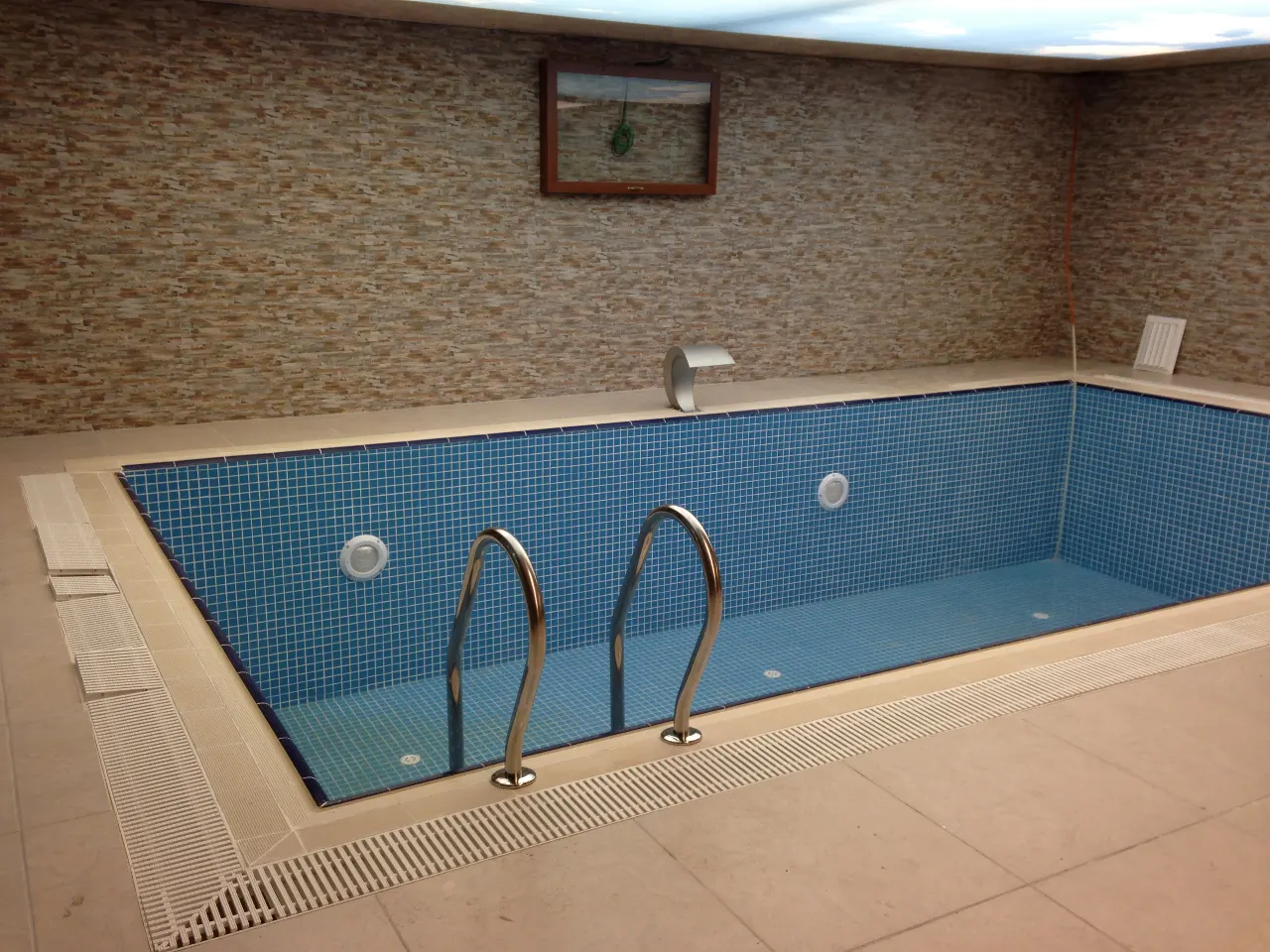
Frequently asked
What do I need to decide before pool construction starts?
The pool's purpose (family, hotel, sport), its location, approximate size and your preferred finish come first. We clarify these together during the survey and build the design on those decisions.
Why does the leak test take so long?
A small flaw in the waterproofing can only be found by breaking the tiles once they are laid. Leaving the pool full of water for at least a week before tiling lets us catch a possible problem at the cheapest stage.
What should be watched after tiling is finished?
Once tiling is done, no work that throws sparks or swarf, such as cutting steel, should be done around the pool, and the tiles should be protected with plastic sheeting.